

More
|
Is Your Water Polluted? These Critters Will Tell You
Learn Tips To Avoid Poisoning Local Water
Would you be alarmed if 30 percent of your neighbors disappeared? Would you panic if 70 percent vanished without a trace?That same kind of thing happens beneath the riffles in many local underwater communities, and it's something local scientists are paying very close attention to.Often overlooked and barely visible to the naked eye, the tiny critters start their lives beneath creek rocks, with some species later serving as food sources for fish.Teeny and inconspicuous, they have a big story to tell. Of course, the little creatures can't talk, but their message regarding pollution is loud and clear; their story is in their numbers, and that says a lot about the chemicals and other substances that could be seeping into local streams, creeks and rivers.Dr. John Jackson, an entomologist, or scientist who studies bugs, of Stroud Water Research Center, said critters like mayflies, stoneflies and caddisflies can't live in areas with serious pollution problems. They offer a world of knowledge that a single water sample can't because they live there and are, in essence, constantly taking samples.For instance, if a formerly healthy critter population drops in a stream or river, it likely means something environmentally detrimental happened upstream, Jackson said. Scientists and environmentalists contribute some of the local water problems to a wide range of things, like overusing fertilizers, suburban housing developments replacing natural forested areas, urban infrastructure, parking lots, toxic driveway sealants, pesticides, acid mine drainage, along with emerging contamination problems, like pharmaceuticals.Jackson, who looks at how human activities on land and water affect rivers and streams, said it's not fair to completely blame agriculture or development on pollution, but said the combination often causes a tipping point.
Slideshow: Critters Detect Dirty Water
Send: Earth Day Conservation e-Card
Fish Consumption Advisories
Pennsylvania | New Jersey | Delaware
"Anything you do in your yard, your driveway, your roof has water contact and will wind up in streams," Jackson said. "Limiting the things that make it into the water mean the less we have to try to remove later."
Instead of nurturing a turf-like yard, which is more expensive and labor-intensive to maintain anyway, plant native trees, shrubs and flowers, like the butterfly weed, pictured.These native plants will soak up the rainwater, increase the value of your home, reduce summer cooling costs and lessen noise pollution from neighboring roads.Native gardening also reduces the area that needs to be mowed, which in turn reduces air and noise pollution.Many local organizations hold native plant sales this time of year, and there are several nurseries in the tri-state area that focus on native plants.
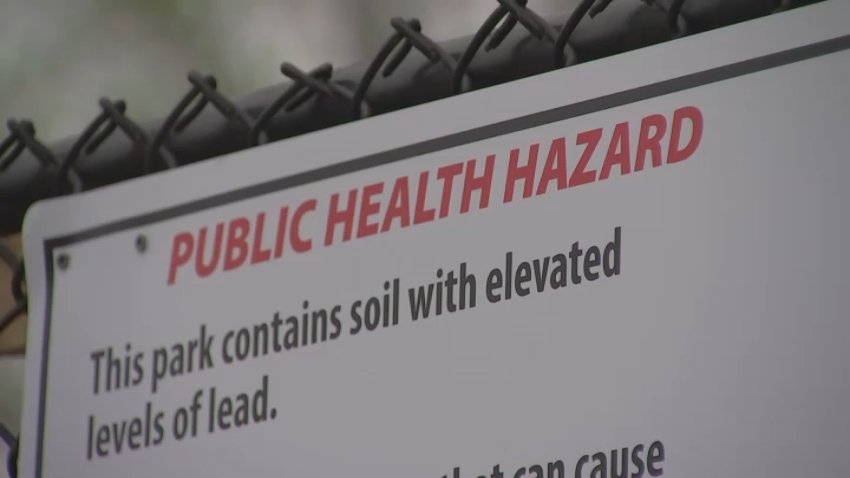
Be A Gutter Guru: Directing a gutter to send rainwater down a driveway leaves room for little or no water absorption. That means the rain washes directly into storm drains and is dumped into a local stream, again contributing to pollution and flooding problems.Instead, direct gutters into gardens, hook them up to a rain-barrel -- which can be easily ordered online -- or install rain handlers that will spray the rainwater out over the lawn.Don't Use: Fertilizers, herbicides or pesticides. People who think they must use fertilizers should strictly adhere to the instructions.Buy Only Free-Range Meats: Factory farms are not only extremely abusive and torturous to animals, but they are a significant source of water pollution to neighboring creeks -- discharging (legally and illegally) improperly treated animal waste, excess nutrients, low level hormones and antibiotics into nearby waterways.Excess nutrients can starve a portion of a waterway of oxygen, thus turning it into a dead zone where nothing can live.Be Observant: Walk along your local stream and look for problems. When you see them, call the Delaware Riverkeeper Pollution hotline at 1-800-8DELAWARE. If it's an ongoing problem, report it to your local police or the Department of Environmental Protection in your state.Those interested in protecting streams can also take action by contacting their representatives. Clean Water Action, a leading public interest group, is urging Congress to pass a new law safeguarding all of America's waters, saying the public strongly supports returning measures protecting wetlands and streams across the country."In our work with over a million members in more than twenty states, people tell us that passing the Clean Water Restoration Act is the right thing to do," said Darrell Gerber, Clean Water Action Minnesota Program Coordinator in testimony today before the U.S. House Transportation and Infrastructure Committee. "The critical question before Congress is: Do we want to throw out 35-years worth of progress in cleaning up our waters or do we want to continue working to make all our waters fishable, swimmable and drinkable? The people we talk to across the country, and independent polls, resoundingly say the clean-up must move forward."Clean Freak: Use eco-friendly cleaners, and be especially cautious if you are doing an outside cleaning project, including washing your car, where the runoff goes to the storm drain, which leads to the creek.Paved Nation: Minimize the amount of paved surfaces in your garden -- rather than a long fat driveway, have a short skinny one that just serves your parking needs; if you are installing a drive, opt to use a porous material, one that allows the water to seep into the ground rather than runoff.Sealants: Don't use them on your driveway, they are a source of toxins.A recent joint study in Texas concluded that coal-tar based sealcoat, which is still available in most home improvement stores, has extremely high levels of polycyclic aromatic hydrocarbons (PAHs), which are toxic to aquatic life. Some PAHs are also listed as suspected human carcinogens, according to the government.The study also showed that PAH levels have been rising during the last four decades in suburban and urban lakes in the United States, according to information posted on the U.S. Geological Survey's site.Pesticideinfo.org listed various names for coal tar, including: coal tar acids, Coal tar cresols, Coal tar phenols, Coaltarphenols, Cresil, Cresol (all isomers), Cresol (mixed isomers), Cresol (Cresylic acid), Cresols, cresyl, Cresylic acid, coal tar acids, coal tar phenols, coal tar cresols or Kresol.Toxic Turf: Do not encourage or support the use of artificial turf at local schools or parks. Artificial turf is emerging as an environmental, health and safety threat.In fact, excessively high levels of lead were recently found in the turf of several New Jersey schools, forcing the cancellation of sporting events and possible relocation of commencement ceremonies at the College of New Jersey. The federal government recently opened an investigation to determine if the toxins are harming people.Buffer Zones: If you have a stream or water body in your yard, make sure there's a healthy, forested buffer -- or ribbon of green plants -- between the stream and your lawn.Vegetation will provide an important pollution filter to the stream, shading and also providing food and habitat for critters that may swim in the waterway or bugs that live on its bottom."Remember, this stream feeds another, which feeds another, which feeds another," van Rossum said. "So you are not only the steward for the stream on your property, but you are determining if you are contributing to the health of that stream all the way down to the bay or ocean."
Slideshow: Critters Detect Dirty Water
Send: Earth Day Conservation e-Card
Fish Consumption Advisories
Pennsylvania | New Jersey | Delaware
"Anything you do in your yard, your driveway, your roof has water contact and will wind up in streams," Jackson said. "Limiting the things that make it into the water mean the less we have to try to remove later."
What Different Bugs Can Tell Us
The key to a healthy stream is diversity, and the major indicator of clean water is the presence of stoneflies, mayflies and caddisflies. These pollution intolerant critters cannot survive in contaminated water.If you look under the rocks in a stream with clean water, they, among other things, will be there."If I don't see mayflies, I know the stream is polluted," Jackson said.In "OK" water, there will be damselflies, caddisflies and dragonflies, but no stone- or mayflies. Poor, polluted water will only be home to critters like black flies, midges and leeches.The bugs are so important to biologists because they give the big picture."Water samples are snapshots, it's only what's in the water the second you yank it from the stream," Jackson explained. "The invertebrates are sampling the water 24-7. It's the difference between a snapshot and a movie."They tell you what's been going on in terms of water chemistry, water conditions, stream conditions for the last week, month, six months, year," he added.The decline of the pollution-sensitive critters helped scientists determine that nearly 30 percent of streams and creeks in the Schuylkill watershed are of poor quality; about half are in fair shape. No matter where people live in the Delaware Valley, they are near a good and an impaired site, Jackson said."I doubt if we lost 25 percent of the bird species that we would consider it insignificant," Jackson said. "No robins in the yard, no red-winged blackbirds at the lake, no terns at the shore? Most would consider any of these losses to be important, yet we lose 50 percent of our pollution-sensitive insects from a stream and do not consider it impaired."Streams in forested areas generally have much better water quality because the ground absorbs and filters rain. Hard surfaces, like pretty much everything in a city, rooftops, sidewalks and asphalt driveways cause major runoff when it rains, carrying pollutants and contributing to flooding downstream."Everything we do has an effect, every parking lot, every house," Jackson said. "The challenge for the public is to draw lines."10 Ways You Can Make A Difference
Water covers most of the planet, so the idea that one person's actions can make a difference may seem overwhelming. But protecting local streams and rivers is easier than many realize.Maya K. van Rossum, the Delaware Riverkeeper, broke down simple ways everyday people can protect their local water resources. The list includes the basics, plus some less-obvious ways of reducing pollution, too. For instance, did you know the meat you eat could have a lot to do with water pollution?Limit Your "Lawnscape:" Grass lawns don't absorb that much rainwater, causing it to runoff into local streams, carrying with it pollution and causing flooding to neighbors downstream.
Instead of nurturing a turf-like yard, which is more expensive and labor-intensive to maintain anyway, plant native trees, shrubs and flowers, like the butterfly weed, pictured.These native plants will soak up the rainwater, increase the value of your home, reduce summer cooling costs and lessen noise pollution from neighboring roads.Native gardening also reduces the area that needs to be mowed, which in turn reduces air and noise pollution.Many local organizations hold native plant sales this time of year, and there are several nurseries in the tri-state area that focus on native plants.
Be A Gutter Guru: Directing a gutter to send rainwater down a driveway leaves room for little or no water absorption. That means the rain washes directly into storm drains and is dumped into a local stream, again contributing to pollution and flooding problems.Instead, direct gutters into gardens, hook them up to a rain-barrel -- which can be easily ordered online -- or install rain handlers that will spray the rainwater out over the lawn.Don't Use: Fertilizers, herbicides or pesticides. People who think they must use fertilizers should strictly adhere to the instructions.Buy Only Free-Range Meats: Factory farms are not only extremely abusive and torturous to animals, but they are a significant source of water pollution to neighboring creeks -- discharging (legally and illegally) improperly treated animal waste, excess nutrients, low level hormones and antibiotics into nearby waterways.Excess nutrients can starve a portion of a waterway of oxygen, thus turning it into a dead zone where nothing can live.Be Observant: Walk along your local stream and look for problems. When you see them, call the Delaware Riverkeeper Pollution hotline at 1-800-8DELAWARE. If it's an ongoing problem, report it to your local police or the Department of Environmental Protection in your state.Those interested in protecting streams can also take action by contacting their representatives. Clean Water Action, a leading public interest group, is urging Congress to pass a new law safeguarding all of America's waters, saying the public strongly supports returning measures protecting wetlands and streams across the country."In our work with over a million members in more than twenty states, people tell us that passing the Clean Water Restoration Act is the right thing to do," said Darrell Gerber, Clean Water Action Minnesota Program Coordinator in testimony today before the U.S. House Transportation and Infrastructure Committee. "The critical question before Congress is: Do we want to throw out 35-years worth of progress in cleaning up our waters or do we want to continue working to make all our waters fishable, swimmable and drinkable? The people we talk to across the country, and independent polls, resoundingly say the clean-up must move forward."Clean Freak: Use eco-friendly cleaners, and be especially cautious if you are doing an outside cleaning project, including washing your car, where the runoff goes to the storm drain, which leads to the creek.Paved Nation: Minimize the amount of paved surfaces in your garden -- rather than a long fat driveway, have a short skinny one that just serves your parking needs; if you are installing a drive, opt to use a porous material, one that allows the water to seep into the ground rather than runoff.Sealants: Don't use them on your driveway, they are a source of toxins.A recent joint study in Texas concluded that coal-tar based sealcoat, which is still available in most home improvement stores, has extremely high levels of polycyclic aromatic hydrocarbons (PAHs), which are toxic to aquatic life. Some PAHs are also listed as suspected human carcinogens, according to the government.The study also showed that PAH levels have been rising during the last four decades in suburban and urban lakes in the United States, according to information posted on the U.S. Geological Survey's site.Pesticideinfo.org listed various names for coal tar, including: coal tar acids, Coal tar cresols, Coal tar phenols, Coaltarphenols, Cresil, Cresol (all isomers), Cresol (mixed isomers), Cresol (Cresylic acid), Cresols, cresyl, Cresylic acid, coal tar acids, coal tar phenols, coal tar cresols or Kresol.Toxic Turf: Do not encourage or support the use of artificial turf at local schools or parks. Artificial turf is emerging as an environmental, health and safety threat.In fact, excessively high levels of lead were recently found in the turf of several New Jersey schools, forcing the cancellation of sporting events and possible relocation of commencement ceremonies at the College of New Jersey. The federal government recently opened an investigation to determine if the toxins are harming people.Buffer Zones: If you have a stream or water body in your yard, make sure there's a healthy, forested buffer -- or ribbon of green plants -- between the stream and your lawn.Vegetation will provide an important pollution filter to the stream, shading and also providing food and habitat for critters that may swim in the waterway or bugs that live on its bottom."Remember, this stream feeds another, which feeds another, which feeds another," van Rossum said. "So you are not only the steward for the stream on your property, but you are determining if you are contributing to the health of that stream all the way down to the bay or ocean."Copyright 2008 by NBC10.com. All rights reserved. This material may not be published, broadcast, rewritten or redistributed.